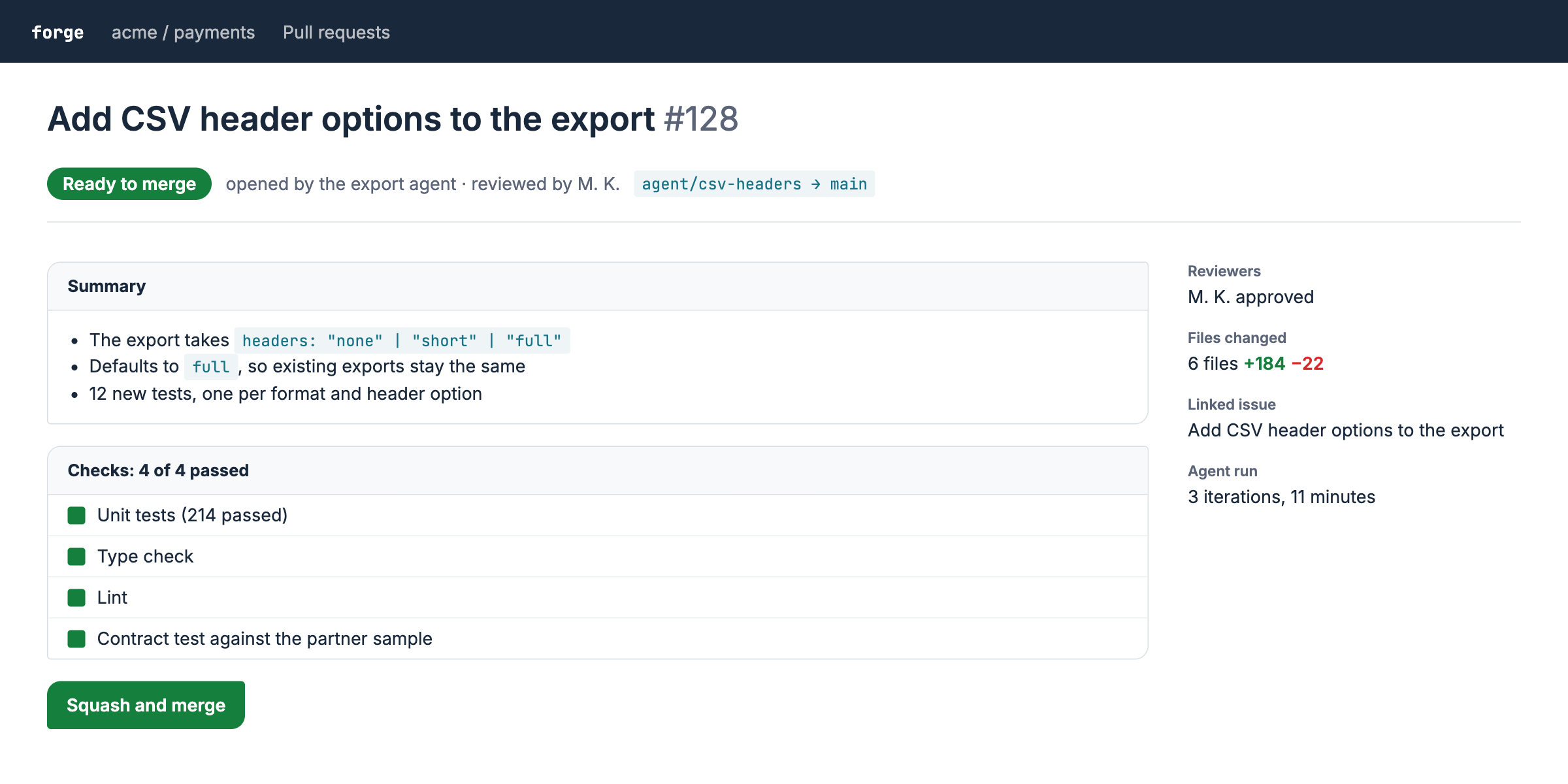
Slide Catalogue
Every slide type and its variants, with fictional content


A chart's plot area: a SlideCard of fixed height the chart fills.
claude --print "fix the failing test" # one run
neutral
primary
primary, active
secondary
secondary, active
size xl
size lg
size md
size sm
tone solid
tone soft
tone badge
tone ink
The caption under a diagram, its last step.
The line under a headline, in muted ink.
The column of a titled slide: headline, then the body under the fit guard.
Every slide type and its variants, with fictional content
A subtitle states the slide's claim in one sentence.
A paragraph carries one thought with an optional link.
Footer line: the take-away the speaker repeats.


Centered layout
Centered content blocks over the particle background.
One line under the hero.

Platform lead, Lumen Freight
Code first, plan later
Review reads the plan before anyone writes a line.
That is the whole method.
What the agent uses.
What it reads.
What is enforced.
What we learn.
“I review plans now, not just diffs.”
Engineer, fictional
“The checks caught what I missed.”
Team lead, fictional
“Monday metrics changed our backlog.”
Product lead, fictional
Fast to start
Fast to sustain
Pick the one you can still run next year.
Fictional comparison.
Slow
Routine
Same team, other habits.
One bad and one good version.
Bad
Make sure it works.
Good
Run bun run test search.
Passes when every umlaut query returns a result.
“Every team should use the same harness.”
“Every team knows its own work best.”
Both
Platform lead
Lumen Freight

Team lead
Lumen Freight
Both fictional.
What it uses
What it reads
What is enforced
Before code
From the plan
Plan and diff
Line by line
Faster typing.
Task by task
Copy and paste.
Ticket by ticket
Plans, checks, review.
You are here
Each stage changes what a person reviews.
Each lane is one agent.
By September, review wait is the whole lead time. Fictional figures.
Two in five tickets sit in Build. Fictional figures.
Part two
Why the checks run before a person looks
Mara Lindqvist
Lumen Freight
Thank you.
“The best harness is the one nobody notices.”
Which check would you add first?
Who reads the plans in your team?
What would you stop doing on Monday?
Roadmap
What comes first, what comes after.
Non-negotiables
Plans first
Reviewed before code
Shared checks
Determinism
Same input, same output
Learning
Conventions grow
Part two · Going deeper
Where each tactic sits in the pipeline.
Fictional plan.
Stream-aligned teams deliver, the other three make them faster.
Fictional organisation.
Each area is a decision the team makes itself.
Steering
Goals and approvals
Architecture
Readable systems
Controlling
Outcome over hours
Business model
How it earns
Service
What, for whom
Organisation
Who decides
Fictional operating model.
Where a stream team's need goes.
Yes
Platform team
Built once, used by every team
No
Enabling team
Teaches until the team can do it
Platform team
Built once, used by every team
Enabling team
Teaches until the team can do it
Fictional example.
Pick a ticket from your own backlog and let the agent plan it before it writes any code.
No CLAUDE.md, no skills. The task:
| Team | Lead time | Change failure rate |
|---|---|---|
| Checkout | 2 days | 4% |
| Search | 5 days | 9% |
| Billing | 11 days | 15% |
| Compact rows, no header | Yes |
| Relative widths | 2 : 1 |
A column can hold text instead of items.
Neutral columns carry no judgement.
harness plan --ticket LF-142Plan written to plans/LF-142.mdpre-commitFormats and lints the staged filespre-pushRuns the full test suiteOne loop per ticket
Day 1
Day 2
Day 3
Day 4
What the agent uses
What the agent reads
What is enforced
Plan
Top line
Diff
Middle
Tests
Green line
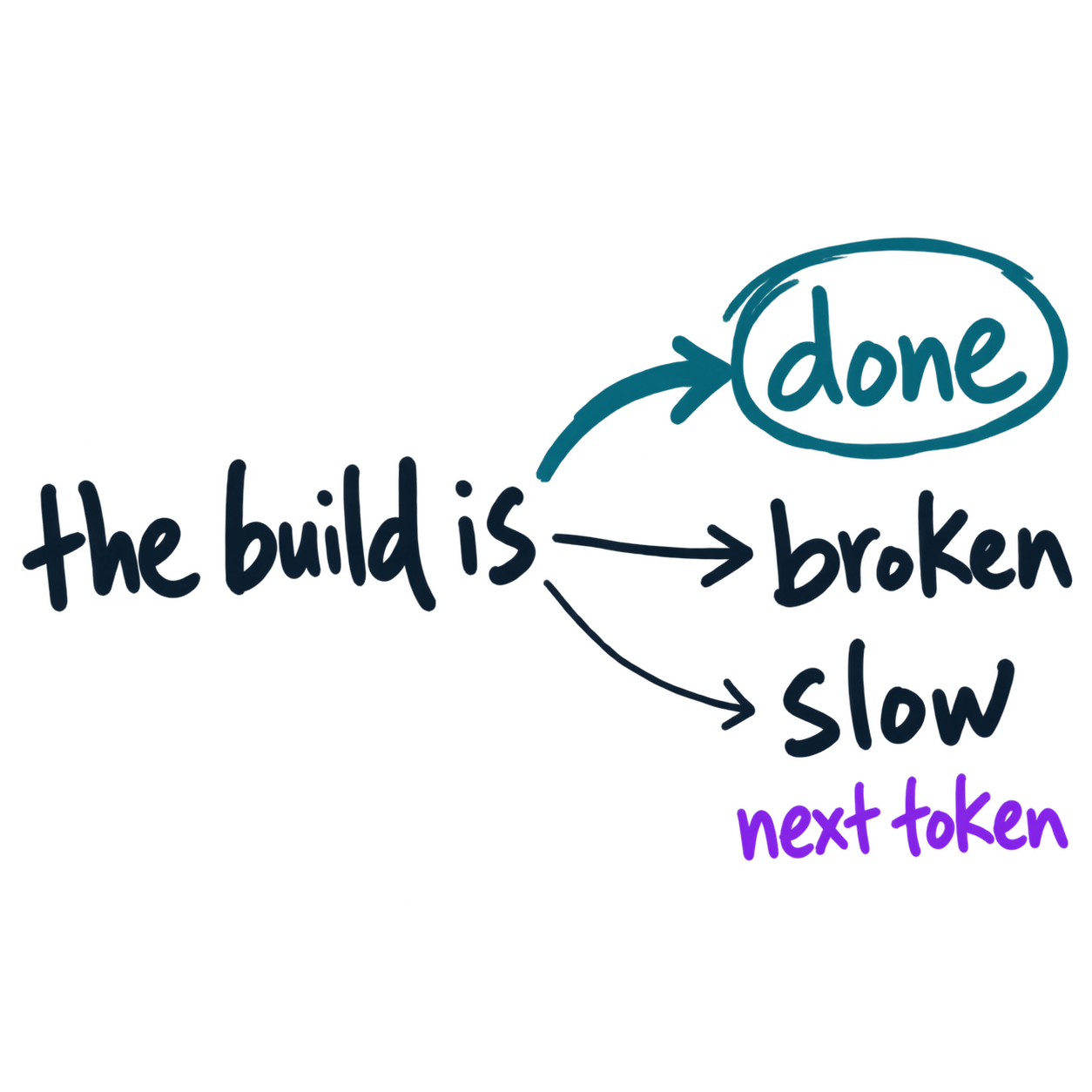
The line so far
The model reads everything before the gap.
Candidate words
Each next word gets a probability.
Next token
The likeliest word is written, then it repeats.
“Every team should use the same harness.”
“Every team knows its own work best.”
Both
Failing test
Make it pass
Clean up
Team page
Plans and checks
Pipelines
Baseline
Cohort 1
Habits
Own team
Fictional survey, 2026
Fictional forecast: the chance to hit each option's success model
Fictional figures
The plan's title
The changed call
Written before code
Same checks everywhere
Conventions grow
What would you stop doing?
What would you start?
Tickets
Before code
In the loop
Behind a flag
Fictional figures
You are here
One loop per ticket
Dense cards carry more text: no mark above the title, a smaller title, muted body.
A written policy gives teams room to try things.
The safety net once the pace goes up.
Documents and code the agent can find on its own.
Speed turns into value only in small steps.
Without it, more output helps nobody.
Paved paths let the gains spread.
One reachable source amplifies every team.
Two stages are active on this slide.
A warning callout names a risk.
A success callout names a result.
A full-width callout spans the column so stacked callouts line up.
Label and strip wrap, and the headline moves down.